The Organizer #111 | Impact
| I’ve decided to measure impact … now what? | The first step in impact measurement is called instrumentation. This is when you figure out how you are going to collect the information you want to analyze (your "measures") and set up the systems and tools to do it. |
You’ve decided to measure impact … now what?
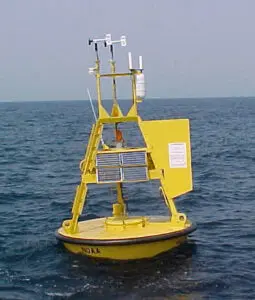
Out in the ocean, surrounded by vast swells of saltwater, a fleet of isolated weather buoys bob. As you read these words, some 1,250 brightly-coloured floating labs silently, diligently collect information about their small patch of the world.
If you’ve never seen a weather buoy yourself, you can guess how it looks: a round bottom keeps it afloat, while pillars in the middle offer lights, solar panels, and sensors to the sky.
With the help of electronics and tiny computers, buoys capture water and weather data like air temperature, wind speed, and wave height. Each isolated buoy shares its data with people back on land by satellite or other communications network.
Weather buoys don’t affect the weather. They don’t change the direction that water flows or make the sunshine any brighter. They just bob around, quietly collecting observations; always immersed in their world, always observing.
You need your own weather buoys
Most people think that impact measurement happens at the end of a project. First you do the work, then you measure impact.
That’s a bit like riding a boat out onto the ocean on Sunday trying to understand a storm that rolled through on Saturday. If you really want to understand something, you need to observe it firsthand.
So, as strange as it sounds, the best time to start doing your impact measurement is at the start of the project. There’s no impact to measure yet, no rain or strong winds or strange currents. But you want to get your sensors into the water, to see them working and test your systems.
Then, when you go out and do your work, you can focus wholeheartedly on the most important part of impact measurement — doing the work that creates impact.
After you decide what to measure, decide how you’re going to measure it
At Entremission, we call the process of setting up your impact measurement systems “instrumentation.” It’s borrowed from science and the practice of creating and using measuring equipment. Instrumentation is how we understand, document, and learn from our actions. Just think of the ways that clocks, GPS, and thermometers — common measurement and observation instruments — influence all aspects of daily life.
Instrumentation is the process of choosing and configuring your instruments. When you “instrument” your impact measurement program, you decide which tools you will use to record the activities and moments that showcase your impact.
Like the buoy bobbing in the ocean, the best measurement tools are embedded in the work itself. Just by doing what you need to do, you are also creating a trail that helps you understand, document, learn from, and prove your impact. For example:
- The names of the youth who join your training program can be recorded in your CRM. Participation is your impact. The names and number of individuals are your measures. Your CRM is your instrument.
- You can take photos of the wetland before and after the work is done, and save them to your photo library. Restored habitat is your impact. The before/after photos are your measure. Your photo library is your instrument.
- The number of meals distributed by your food pantry can be recorded in a weekly log. Feeding families is your impact. The number of meals distributed is your measure. The log is your instrument.
Set up your instruments early in the project
Once you know how you’re going to measure it, it’s time to actually set up the measurement process. Assign responsibility to someone who understands both the projects and the tools, configure, and test.
When the systems are in place and your project is up and running, have someone check in periodically. Make sure your data is being logged. You can even use early feedback to strengthen your project.
It doesn’t have to be complicated
Start simple. Pick one thing you want to know at the end of your project, and work backwards: what would tell you that? Who would collect it? When? That’s your first instrument. Once it’s running, add another.
Buoys don’t wait for the storm to decide what to measure. Neither should you.
The Organizer is a newsletter for people working to create equitable and sustainable communities. Whether you are part of a nonprofit, a charity, or a social enterprise, this newsletter is for you.
Each edition, we explore one aspect of social impact work. We answer a common “How do I …?” question, and we tell you about a tool that will help make your work a little easier. Subscribe for free at Entremission.com.